You’re right. It’s a click-bait title. But I can only work with a handful of clients at a time so on this site I put a lot of the tools and approaches I’ve used for over 30 years with clients (and with running my own companies). I can’t give personalized advice with a website but [CLICK HERE] if you’d like a free coaching session. Otherwise, keep reading.
As a coach, I help put the infrastructure in place that frees you up from day-to-day demands. This allows you to use your superpower and get what you want FROM the company. Below I’ll share how I approach working with a coaching client – some of the tools I use and the order in which I think about them. However this is just theory. It rarely goes as linearly as this. Why? people are different and shit happens. But if you want to DIY it use this to help you decide where to start.
TL;DR
I start with looking at the company as a collection of systems to see which ones demand the owner/operator’s time and attention. Then we work to build the infrastructure to produce the same outputs without their direct involvement. This often takes 18-24 months, especially if it’s to be done without raising outside investment (which can take longer).
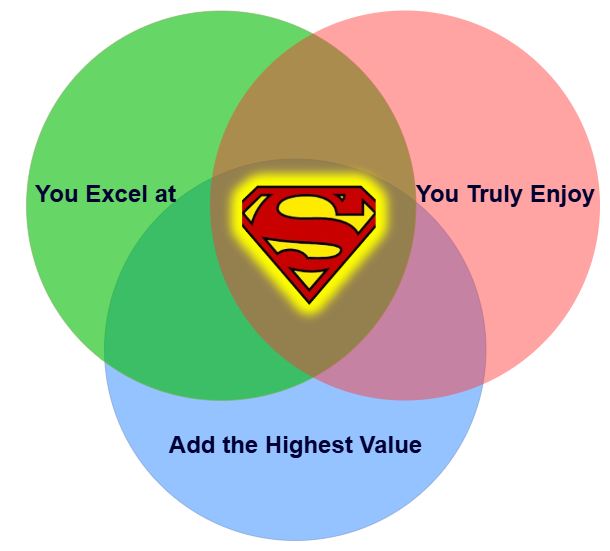
At this point, some clients have reached their goals. But others continue on to use their superpower and build the kind of company that gives them what they really want.
The Goal
My goal as a coach is to help the client achieve success as they define it.
What does that mean? It means helping them get what they want from their companies. What do clients want from their companies? I’ve found 3 universal desires and about 20 that only apply to some people. The three universals are:
- More Money
- More Time Off
- Work You Love
So my first question is which is most important to you to work on now?
I use a modified version of the theory of constraints. That means working on the one thing that’s doing the most to slow things down. Many things in business can’t be controlled or can’t be worked on immediately without making things worse. But one thing can be controlled – your time. SO that’s where we usually start.
This is why I don’t start with your vision or your goals. We’ll get to that, but only after we’ve freed up your time to stop being driven by day-to-day urgency so you have the space to move forward toward your goals.
Your Time
Your time is what you can most control so that’s the place to start. The first thing I recommend is carving out and protecting CEO Time. We use a time log to track not what you’re doing but why; which of the four focuses is most demanding. A time skeleton is used to give structure to your time and tools like time blocking allow you to give every hour a specific job rather than merely react to what you can’t control.
Money
Money is the lifeblood of any business – we have to keep it flowing. But it’s also a source of insight if you know how to interpret what it’s saying, and involve systems that are easy to standardize (though most SMBs wait too long to do so). In other words, we’ll be working on collections, defining your different revenue streams, understanding the unit economics and working capital needs of your business and using tools like a 13 week cash flow to eliminate surprises as you grow.
The Infrastructure
This is the structure that supports your people to do great work – think of the assembly line in a factory or the research tools in a lab. Here we look at your tech stack, your SOPs and workflows. We can improve things with tools like Process Maps. The most common missing element of infrastructure in my experience is a good Communication Protocol. This reduces interruptions, solidifies task tracking and provides an efficient meeting cadence.
People
You can’t get the right people in the right seats on the bus till the bus and the seats have been built. That’s the infrastructure I mentioned above. Now we look at your hiring process and other HR functions. We make sure the management structure is working and instead of an org chart, I prefer Accountability Maps. Professional Development involves a training grid and robust systems.
Your Goals / Metrics
Ultimately you and the other owners are involved in this company at this time because you want something from it. You have a vision for where it can go. Getting there requires Strategy, and proper Plans. You need to serve the right customers and if you have parters or a board of directors you need to deal with them properly. Then progress must be measured using the appropriate KPIs and tracking. Ultimately your role as CEO can be crafted to serve you, your company and y our customers.